Winchester News Online
My trip to the future of journalism
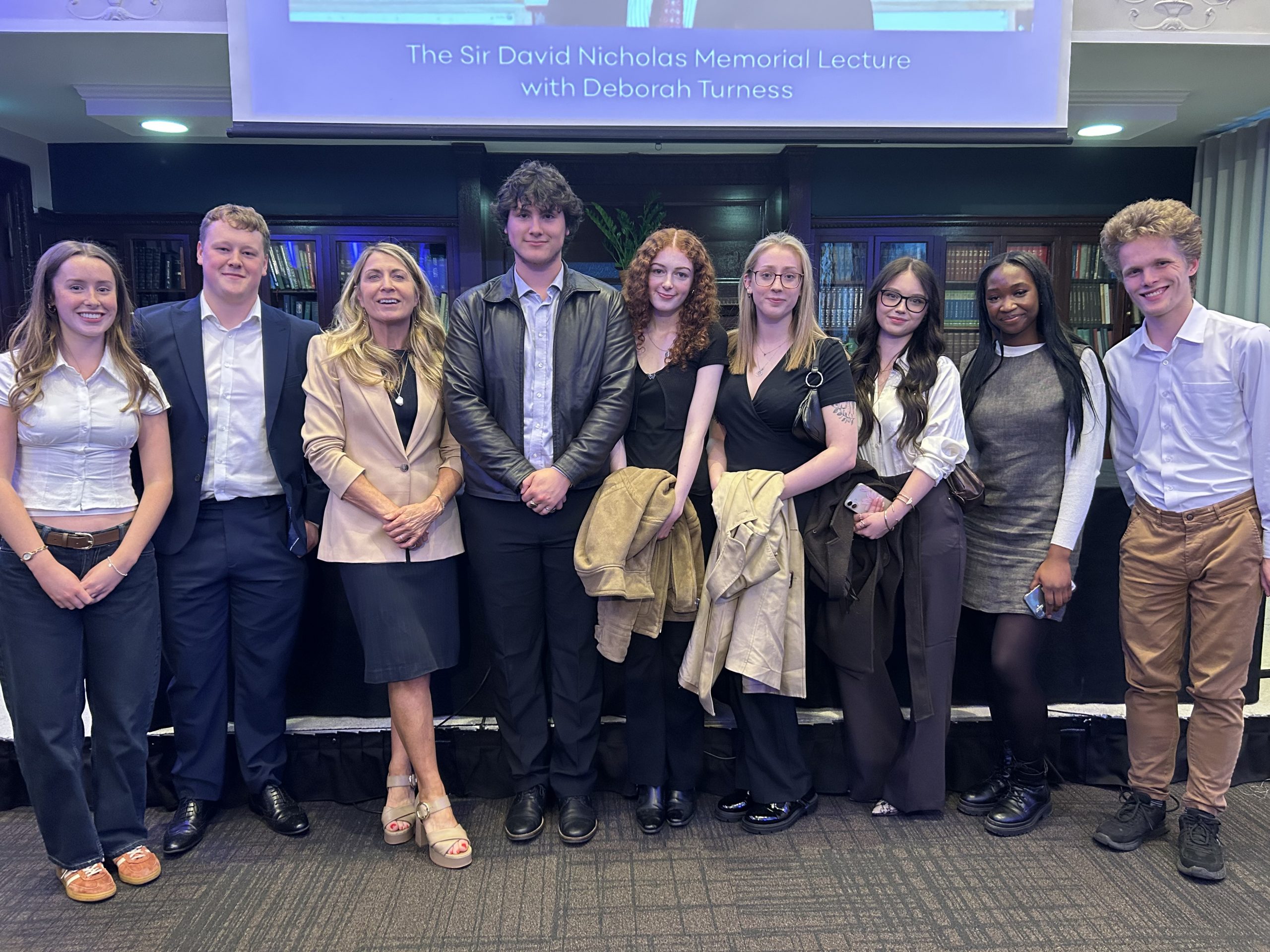
Myself with Deborah Turness and other students after the lecture. Photograph: Kate Ironside
Last Tuesday, I made a whistle-stop trip to London for the Sir David Nicholas Memorial Lecture, a prestigious event attended by working and retired people in the journalism industry.
The guest speaker was Deborah Turness who used to be the BBC News boss. I want to tell you about my experience.
It started when I caught the 4pm train down to London. I loved seeing the iconic skyline come slowly into view (The Shard, The Gherkin, The London Eye) and the jungle of buildings looming above my train.
Dashing through the underground, a friendly staff member told me I should change trains on the Bakerloo line to arrive at Great Portland Street.
I had expected a direct train from Waterloo. Anyway, my expedition under the capital was successful.
When I walked to the lecture centre (five minutes), there were at least two people on the street who may have been homeless.
Surely, this shows the close divide between the wealthy and poor in London; the worlds they inhabit are so different yet so near each other.
Arriving at the building, I was greeted nicely before someone hung up my coat and bag.
Attendees were offered a glass of wine however I stuck with water (do not tell anyone but I am a teetotaller).
Our supervisor Kate encouraged us students to chinwag and network with the professionals.
I talked to a few people which was fantastic because these interactions do not come naturally to me.
Challenge from social media
Mary Nightingale (ITV News presenter) introduced Turness, saying that she could give “robust” debriefs as a leader but was very kind and always defended her team.
The lecture asked what established media could do about the rise of independent ‘Creator’ voices.
For example, the consumption of TV news has decreased by “4 million…people… in the past five years”.
In contrast, the amount of people consuming news on TikTok has increased “10-fold.”
This new market centres around “commentary and conversation” while missing “frontline reporting” or “undercover investigations.”
Consumers should not be losing out on these two features. Turness’ message was that broadcasters should switch their focus to catering for this direct journalism.
Journalism must change
To achieve this, four keys were laid out.
The first one was gaining back trust such as showing how a news operation works behind the scenes or proving to the viewer that your facts are true.
The second was authenticity – Turness said that bosses should let their journalists “off the leash” a bit. They should have the creative freedom to be themselves on camera or microphone, producing relatable, real content on “YouTube, Spotify” or “Substack.”
Key number three was “reinventing the newsroom.” Turness said they should channel energy to create “content in the formats and on the platforms that consumers want”: from live streams to short videos, in-depth articles to “conversational podcasts.”
The final key was putting a stronger stake into opinion and debate. Turness said this should not be the “preserve” of online places that regularly stoke “polarisation.” Traditional media should put up a “marketplace” of ideas that are “thoughtfully curated” and “provocative.”
In my opinion, I agree with these essential aspects. The established broadcasters should be reforming – mixing the traditional with the new – especially in combatting far- right echo chambers and populism in our politics.
I also hope that journalists will have lots of support to put themselves forward more online; I do not believe it is easy for everyone to be the real, authentic individual.
After the speech, Nightingale conducted an interview and Q + A with Turness.
I must say, this was an exciting surprise. Challenging questions were asked. Mary Nightingale had put on her ITV hat and it was excellent to witness.
When she opened to the floor, some audience members also had reservations about these proposed reforms.
I was privileged to ask a question about practicalities – what could a new-style, informal ‘News at Ten’ bulletin look like? It was amazing to see such high-profile people as Nightingale and Turness listening to my question with all seriousness.
During the post-talk socialising, I received two pieces of advice from both retired and working professionals.
The first one was to get the hang of the “bread and butter” of journalism first (the basic rules and techniques) then be ready to branch out using new methods of broadcast.
The second was to persistently knock on the doors of employers and write to lots of people to boost my job chances. I am glad I remembered to write these down – I am determined to apply them.
After leaving the hall, a lovely postscript occurred as the other students invited me to chat with them at the pub.
Before I arrived at the Tube in Oxford Circus, I could not resist diverting to get a selfie at BBC Broadcasting House.
This was very familiar to me from television. Finally, it was off through the multicoloured lights of Westminster towards home, accompanied by a lovely bunch of budding journalists.
All four of us were satisfied about the evening we had experienced.
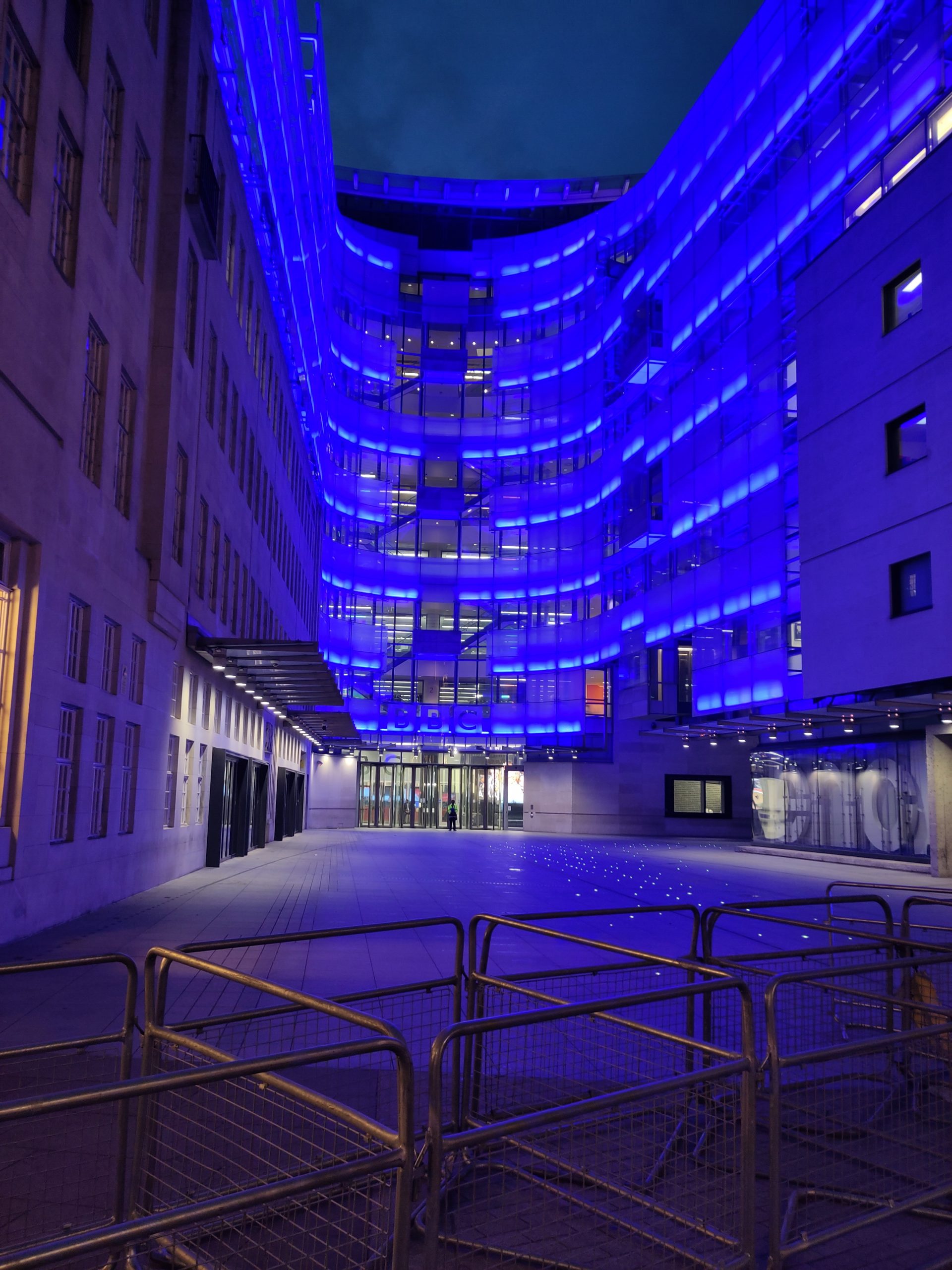
Exterior of BBC Broadcasting House. Photograph: Matthew Hays