
Winchester News Online
Inside the UK’s biggest archery club

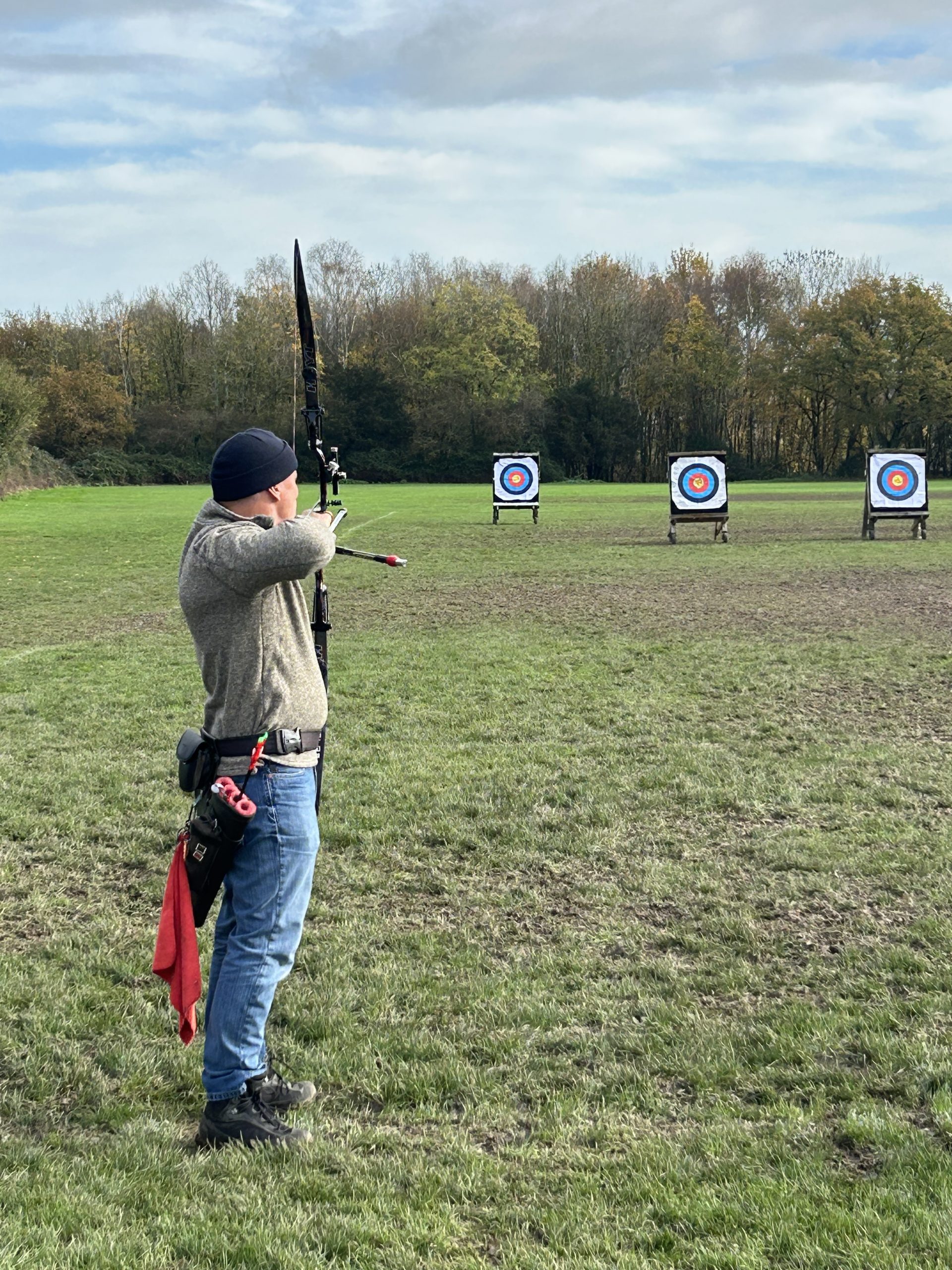
At Southampton Archery Club, members displayed why it has that title in its latest Saturday training session.
They met weekly for practice, for coaching, for community support.
A dedicated group of archers show up almost weekly, representing the reliable and committed core of the club, a good source of support and backing-up for the squad.
But what sets Southampton apart is how it’s able to keep such a strong, consistent pipeline of experienced members from an established group of archers united by this history with a high level of new and ongoing membership.
The club facilitates introductory sessions for those just starting out on archery, providing equipment and guidance for beginners, coaching and equipment for recreational archers. Many of the active members of the club began with these introductory programs.
This nurturing culture is supported by Emma Polglaze herself who helps keep it going. She supports disabled archers, based on her own experience living with spinal arthritis.
Polglaze knows what the physical conditions can add to the difficulties.
She often assists members who require personalised adaptations, encouragement, or modified approaches.
There may not have been any disability-focused sessions on the Saturday that was recorded, but her impact was still very much present in the club’s atmosphere.
“For me, it’s about helping disabled archers get confident and feel accepted in the sport,” she explained. “I understand how much, with the right support, matters.” “I shoot from a wheelchair; I can still be part of the club,” she said. “I can still do what I love, simply by being in the chair.”
Her dedication is part of a larger club philosophy: everyone, whether they have enough years, are young or old, or those who are physically challenged should have the opportunity to try archery.
A group camaraderie was alive in all of the room, captured on video and photo so it was apparent it was clear the entire group got along well. In its current state, the size, scale, organization and inclusivity of this group means that it really shines across the nation.
Southampton Archery Club, with weekly sessions, continued coaching and a commitment to welcoming new archers, has emerged as the very best example of what a modern community sports club can be today.


Brighton and Hove Albion Women scored a second half winner against London City in the Women’s Players Cup.
London City Lionesses had a shaky start to the match not converting any chances and spending most of the half in their own half.
In the 16th minute London City’s young forward, Rosa Kafaji was shown a red card following two yellows for bad fouls, leaving the team with ten.
Brighton’s Emily Murphy managed to score the Seagulls goal the 66th minute giving them the lead and three points.
The attendance of 1,048 fans turned up in support of their teams with signs, flags and chants.
Brighton were greeted by their fans following the match with drums and high spirits as the players gathered thanking them.

Winchester residents, including primary school children have been celebrated for their support of a local homeless charity.
Every year, the Beacon, which has the main goal of supporting and rehabilitating the homeless, holds an annual supporters evening to thank members of the public who have helped out and raised money to support the homelessness.
The event is held annually in the Arc, with it taking place on the 15 October this year.
The current CEO of Beacon, Robyn Kohler, said: “It’s my intention that we should use the evening to thank people who supported us.”
The Beacon, which has been operating within Winchester since 1988, helps to rehabilitate people suffering from homelessness in the city.
After staying with the charity, many people eventually find themselves on the property ladder, and others even find work.
The event saw a number of volunteers, some as young as primary school age, taking the stage to receive recognition for their efforts in benefiting the charity.
Activities such as knitting, baking, and general arts and crafts were all acknowledged as both donations and ways of raising money.
As well as this, many supporters read out statements written by previous residents of the Beacon, who had since found housing, and wanted to thank the charity for all of their hard work.
Kohler said that, while there are future challenges that they expect to face, Beacon will continue to collaborate with the local community to better ensure the protection of those vulnerable within our society.

On the 21 October 1966, 116 children and 28 adults were killed when a coal tip collapsed and engulfed a local primary school in the rural Welsh village of Aberfan.
The tragedy was remembered in an event at The Arc – an exhibition centre in Winchester – last month.
Speakers included Sam Knight, a journalist who was one of the first on the scene on the morning of the disaster.
He told of how, just after 9 o’ clock that morning, 150,000 tonnes of coal waste slurry slid down the hill covering the primary school and several houses nearby.
Another speaker, Alistair Jones, whose grandmother had survived the tragedy, told how she always kept a photo of a local boy on her mantlepiece.
The boy, who Alistair’s grandma had spoken to every day on his way to school, was among the 116 children killed.
Liam Jones, who has written a play about Aberfan, spoke of the injustice the survivors faced.
He explained that insurance payments to families who had lost their children were decided on the “level of grief” the parents were exhibiting.
He said some were assessed on “how close” they had been to the children who died.
A national inquiry into the disaster concluded that blame rested upon the National Coal Board.
However, money was initially taken from the public disaster fund to help pay for the removal of remaining coal tips above the village. That decision was reversed 30 years later.
Sam Knight, who chaired the commemoration, said: “Anniversaries like this are always important to keep the memory of Aberfan alive.”
-

 Bulletins3 years ago
WINOL Sport Week 9 14/11/2023
-

 Bulletins3 years ago
WINOL – Week 9 – 14/11/2023
-

 Bulletins2 years ago
Latest news bulletin for Winchester
-
 Culture9 years ago
ALICE WHEATLEY: SIMON HARMER – BLOWN AWAY
-

 Bulletins3 years ago
Winol bulletin – Week 6 – 20/02/24
-
 Documentary9 years ago
Georgie Wingrove: Peter Waterfield – Life After the Olympics
-

 Inside Journalism3 years ago
Journalists in the News: AI Journalism
-

 Bulletins2 years ago
Latest news bulletin for Winchester