
Culture
REVIEW: WNO La traviata at Mayflower Theatre


The ‘Welsh National Opera’ were back at Mayflower Theatre but this time with their rendition of ‘La traviata’. This is textbook opera. With music composed by Giuseppe Verdi, the traditional Italian sung opera has musical highlights that are instantly recognisable – whether you’re an opera fan or not. Based on the novel ‘La Dame aux Camélias’ by Alexandre Dumas, ‘La traviata’ takes you on a story of love and pain all through its powerful and beautifully poignant music.
With this being a more traditional opera, it could be perceived that the story would be more difficult to follow unless you were an avid opera expert. In WNO’s case however, this is again completely untrue. The piece has been perfectly crafted to allow for the story line to flow, but also for certain beats to be interpreted however each audience member sees it. The story is very people focussed, so each person may interpret what’s happening slightly differently – but still end up at the same point. Something that both Directors, Sir David McVicar (original director) & Sarah Crisp (current director), have been able to put across through not only the music, but the acting that accompanies it.
It’s no surprise again that the singing was faultless.
‘La traviata’, translating to ‘The Fallen Woman’, is a story that follows Violetta, a woman that has it all at the height of society. But when she falls deeply in love with a penniless poet, Alfredo, she gives up her lavish lifestyle to be with him. To avoid spoilers, Violetta’s struggles are now whether she will be accepted for falling in love, or will she just remain a ‘fallen woman’?
The cast for this opera was insane! Not only in terms of talent, but also in terms of size. Overall there must’ve been about 40 cast members, not even to mention the orchestra yet. The entire company was amazing. The vocals, the dancing, the acting – all superb! As a new singer for WNO, playing the role of ‘Violetta Valéry’ was Stacey Alleaume; and all I can say is WOW! Stacey was out of this world. Her vocals were flawless, the control to be able to sing like that whether she be standing, sitting, lying. Unbelievable. Not only did her voice leave you in a trance, the acting was fantastic, something that can sometimes get overlooked when music is the central point of interest.
Her character progression was so compelling, we were with her every step of the way. Also, I’d just like to add how much of a vocal strain it can be to fake cough and then be able to sing. As Aiden Lang (General Director for WNO) said, “Violetta, is one of the pinnacles of the soprano repertoire”, and Stacey absolutely smashed it! A big shout out also needs to be given to David Junghoon Kim, who played the role of ‘Alfredo Germont’, because he too was superb. It’s no surprise again that the singing was faultless, and in particular his acting again was brilliant. I loved the bond that these two characters had on stage. The way you could see every emotion play out in not only their voices but also their actions was sheer perfection. Overall, it was the cast that controlled the tone and emotion of there opera, and they executed that perfectly. By doing that it just meant that the story was more flowing and much easier to follow. Bravo!
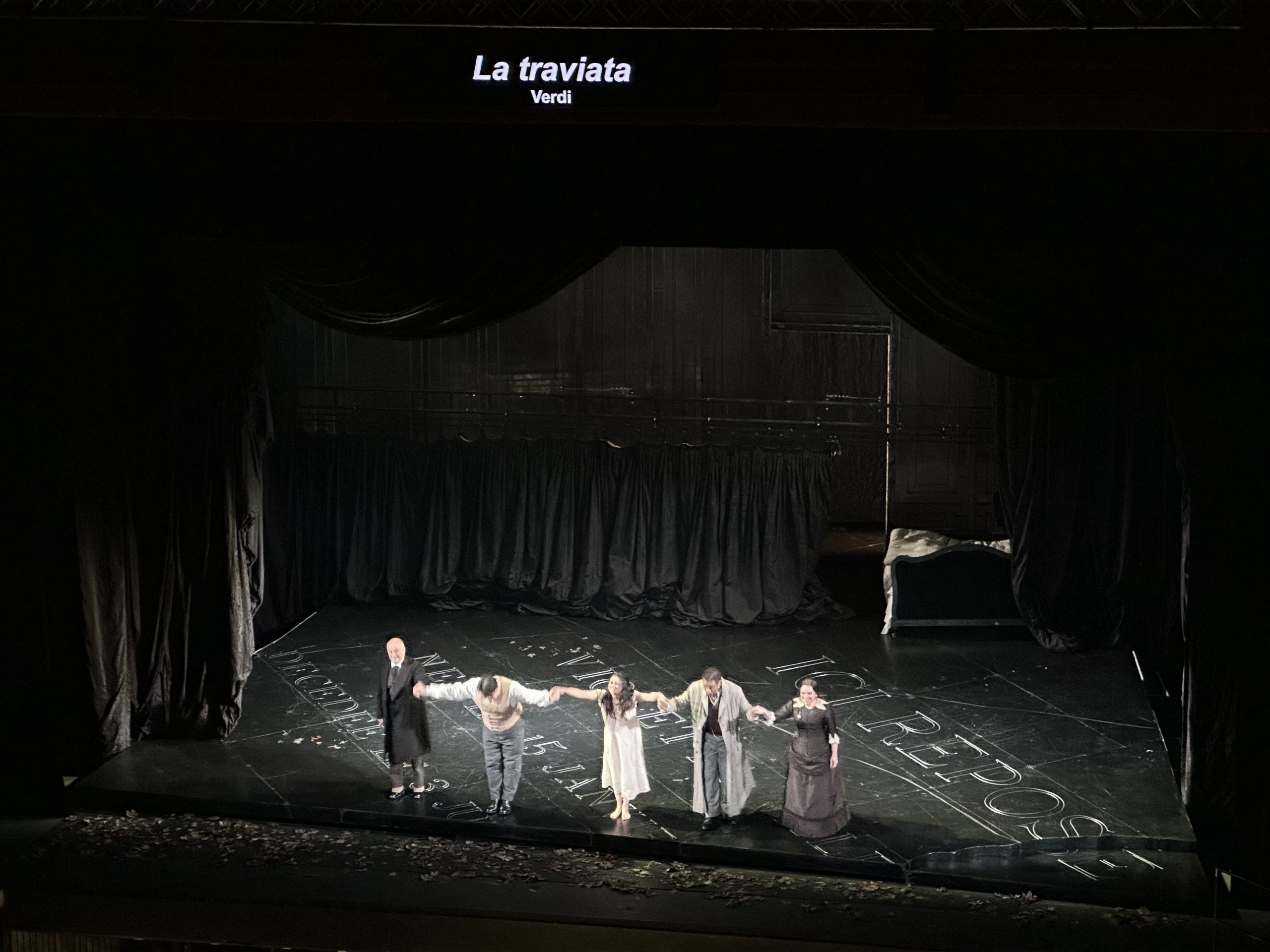
The set was exactly as you would imagine for a traditional opera. Simple yet grand. Big curtains that hung in variations of ways to leave certain parts of the stage hidden, accompanied with grand stately furniture. The space was managed very well to be able to split a scene with the pinch of curtain, and change the scene whilst the show continued to play on.
*Spoiler Alert*, but I also loved how the whole floor of the stage was Violetta’s tombstone. Such a clever piece of foreshadowing literally hidden in plain sight. The lighting was also simple, but it didn’t need to be anything more than that. There were a couple of moments where the use of light was quite powerful, singling out a certain moment or pathway. WNO’s incredible orchestra are what really help make everything come together. I’ve already mentioned how impactful the singing was, but everything gets heightened with that orchestra. The most instantly recognisable piece played would’ve been the drinking song, ‘Brindisi’. The vibrancy that was brought to the the theatre when that song was played was mesmerising.
I think everybody should experience an opera at least once, and if it’s with WNO – you could find yourself coming back for more.
‘La traviata’ is cut up into three acts with two intervals. There’s always the worry that it could’ve begun to drag, but I don’t think it did. The pace of the opera was kept at a constant, with a big thanks to the music. Notably however, after scene one of act two, you could feel the tempo starting to become flat. To regain some of that energy, the beginning of scene two of act two was the dance sequence from the gypsies and the matador. This was such a fun break from the main story and it almost reset the audiences minds temporarily. Choreographers, Andrew George (original) and Sirena Tocco (current), have done really well to add in a little bit of comedic fun within a tragedy. Another key moment that has stuck with me happened right at the beginning of the show before anybody had even started singing. Alfredo is seen walking in all black in front of the curtain to an overlay of music. *Spoiler Alert* (again), but this is foreshadowing Violetta’s death and is meant to symbolise him walking at her funeral. Such a nice added detail.
WNO’s attention to detail has to be admired. As an ‘opera newbie’ myself, I was worried there would be so much I wouldn’t understand that would just go unmentioned. But Welsh National Opera seem to be trying to make opera as accessible as possible. This rendition of ‘La traviata’ was stunning. A story with women’s health and social status at its centre is not only rare in opera but also in theatre, and I think the story is as important today as it was when it first debuted. The Welsh National Opera have come to the end of this tour but will be back in the spring with ‘Death in Venice’ and ‘Così fan tutte’. I think everybody should experience an opera at least once, and if it’s with WNO – you could find yourself coming back for more.

Performing arts education isn’t just about learning to act, dance, or sing – it’s vital in developing many young people’s confidence and self-expression.
In a digital age where young people are spending more time on their devices than ever before, theatre education provides lifelong skills like communication, resilience and teamwork.
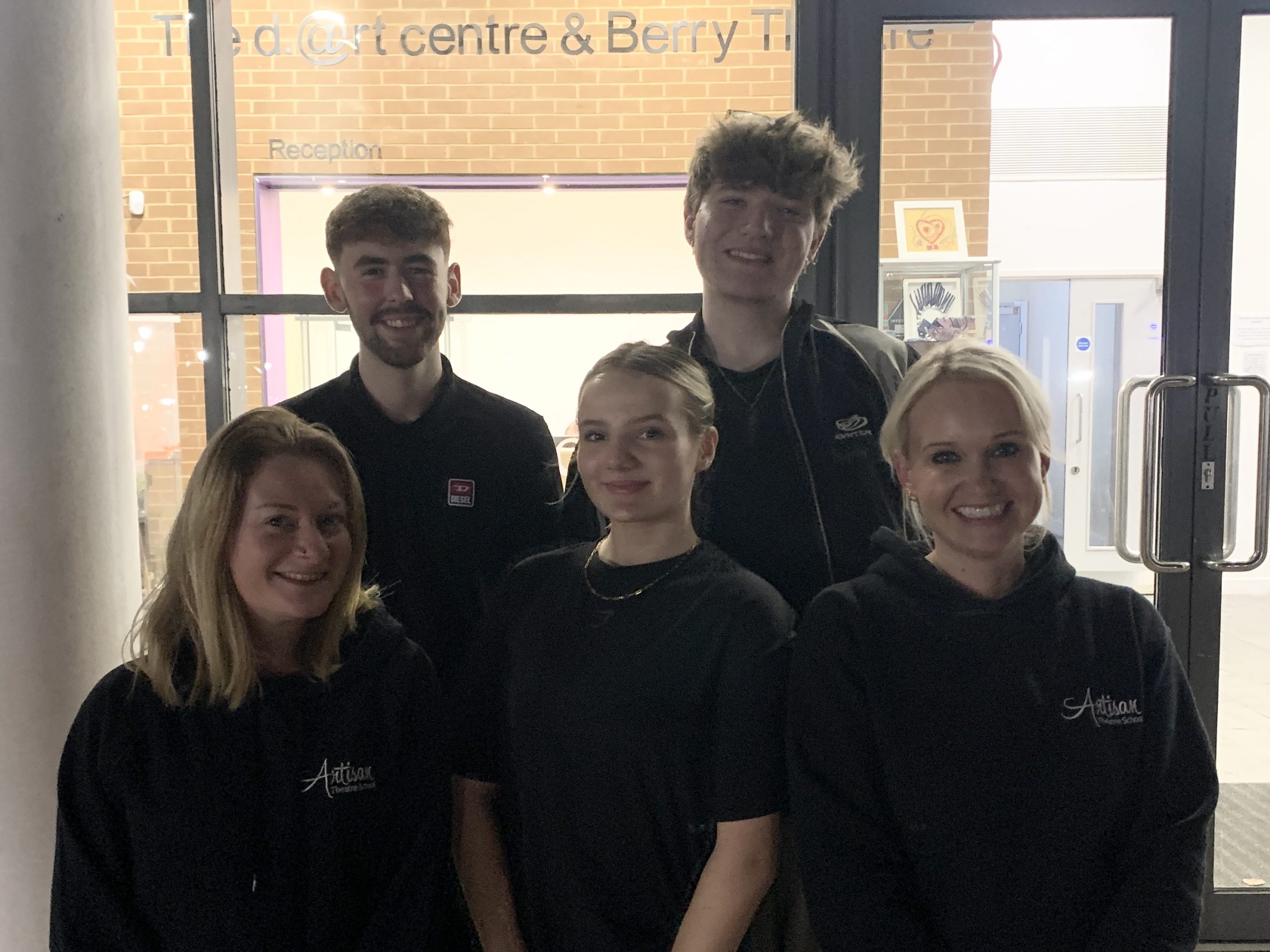
I caught up with some of the students at Artisan Theatre School, a Hampshire based youth theatre club, to see if this rings true.
Ben, 18, said his time at theatre school has “helped develop people skills” and made him “a more confident person”.
He urged other young people to “get involved and enjoy it!”
Daniel, 17, shared a similar sentiment saying his “confidence has grown a lot”.
Theatre education can open a whole world of new opportunities for young people, giving them the space to discover their talents and explore future career paths.
Lucy, 17, has attended Artisan Theatre School for nine years and said: “I want to be a performer in some capacity.”
She added: “That’s my dream because of Artisan.”
Emma, a singing teacher at the school, said performing arts education is “beneficial to anyone,” not just those pursuing it professionally.
She added it can be especially valuable for children with SEN, helping them build confidence, improve communication, and “come out of their shell” in a supportive environment.
Unfortunately, despite its benefits, arts education is not guaranteed for every young person.
Cuts to funding over the last decade has had a significant impact, limiting access to creative learning opportunities.
The Cultural Learning Alliance’s 2025 report reveals a 42% decrease in Creative Arts based GCSE entries since 2010, and a 27% decline in the number of Arts teachers.
Sam Blackwell, principal and founder of Artisan Theatre School, said arts education is “really important” and that “they don’t do enough of it in schools”.
She explained that her vision in creating the school was to “give back more to kids and get them being confident”.
To help fill the gaps left by reduced arts provision in schools, Sam plans to introduce additional classes and offer increased opportunities for her students to learn from industry professionals.


The Shakespearean nature of Tony Blair’s time as Prime Minister is something that had never been seen and his obsession with “the spin” that had won him the 1997 election and made him one of the most popular prime ministers when entering office.
With large proportions of the public optimistic for his premiership incoming.
A fall from grace would ensue much like Macbeth.
It would be cruel and untrue to reflect on Tony Blair’s premiership to say that it was a complete failure, especially as many still see him as one of the best PMs the UK has ever had.
Since one of the biggest landslides in UK election history in 1997, he was able to push through many socialist policies without much of a hassle: inflation was low, crime was down by a third, children were achieving some of their highest results ever in school, thousands more students were going to university, a million pensioners and three million children had been taken out of poverty, the quality of the air, beaches, and drinking water was as clean as before the industrial revolution.
However 9/11 changed everything. The era of youthful optimism and rebellion has been replaced by what a lot of thinkers call post-post modernism.
At site Zero, George Bush claimed that “those who are responsible must be brought to justice.”
He outlined Cuba, Iran, Libya, Syria, North Korea and most importantly Iraq.
Once the troops stepped into Iraq, it was the start of a domino effect that quickly decimated Blair’s time as PM.
Unlike Kosovo and Sierra Leone, Britain’s involvement in Iraq did not have the public’s support.
In his book The Prime Ministers, Steve Richards remarks that Tony Blair had not assumed any cabinet position in the lead up to his premiership and asks:”What if Blair had been foreign secretary? at least he would’ve seen, and interpreted intelligence – an explosively contentious issue in the run-up to the Iraq War.”
And then, the day after London had been announced as the host of the 2012 Olympics, on the 6th of July 2005, 7/7 happened.
Four terrorists detonated bombs on public transport – 52 killed and 784 were injured.
When times get tougher and life gets sadder, what do people do? Dance to forget
Prince William and Kate were leaving a Chelsea nightclub at 3am, Prince Harry was partying with Kanye West and getting into a scuffle with photographers at 4am.
The 2000s club scene was here and everyone was taking part; it was loud, it was abrasive, and it was here to stay.
Since the introduction of the stifling 1994 Criminal Justice Act, which is considered to have brought the illegal rave era largely to a close, “free parties” were the new get-around of the law: Student clubs offering “buy one, get three free” on alcopops and 50p doubles for an hour.
Halls bars were £1.20 a pint. Artists like LCD Soundsystem, Missy Elliot and Rihanna began their rise to fame with dirty, booming soundscapes that captured the drug-fuelled atmosphere of clubs as everyone dances to a beat that never seems to end, drenched in sweat.
Films like Trainspotting capture the allure of 2000s clubbing but the grim reality, drugs have found their way into the club scene.
Much like the Oasis album Standing on the Shoulder of Giants is described as Oasis’ “come down album”, the 2000s was a comedown era of clubbing.
The times were sad, but the music got louder?
As David Cameron’s government entered Number 10 Downing Street in 2010 and ushered in 14 years of austerity, where exactly would clubbing culture go with almost all clubs closing….

2 out of 5 stars
A disappointing third album filled with negativity
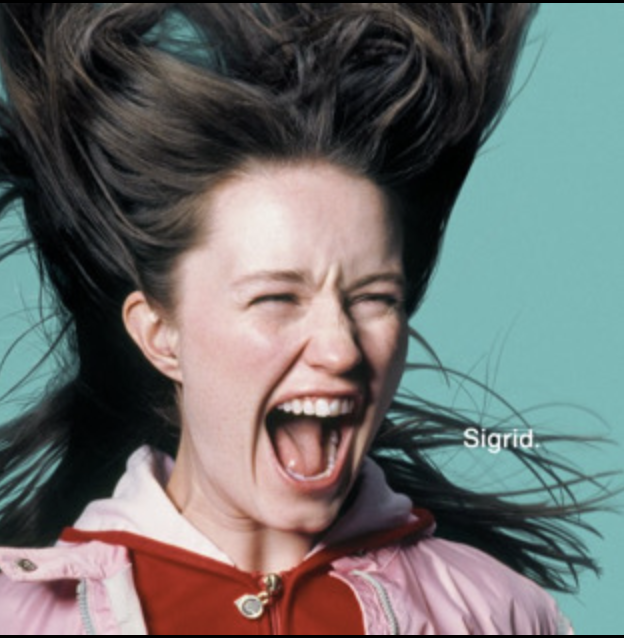
In all honesty, I was late to Sigrid’s party.
I started following the Norwegian pop star in 2023 when she had already released two albums and completed a slew of EPs and international tours.
In no time at all, I was captivated by her rasping tones, funky rhythms, and cool electronic synths.
When news broke that her third album would be releasing on 24 October, it was no surprise to find myself listening and assessing it…
Jellyfish is the first single and the most lighthearted. I like it.
It’s a nice story about two people meeting at a dance and kindling a relationship.
Sigrid sings in a syncopated rhythm, giving a jazzy tone to the tune.
For the first time in her career, she includes a flute.
Cold, gritty, grim
It plays a flourish at the beginning but I can’t hear it throughout the rest of the track. It would be good to hear more of the flute in future.
Fort Knox is single number two. As the name suggests, this is a cold, gritty, grim song about a woman betrayed by her man.
This betrayal cuts so deep that she has retreated into her shell to “lock my love up in… Fort Knox”.
I enjoyed the dramatic, dark nature here, especially the war cry chorus throughout the song.
Towards the end, you would think the song has finished before it plays one more crescendo of strings to cap things off. I thought that was unnecessary.
The third single, Two Years, is written from the perspective of the woman’s boyfriend, another new departure for Sigrid.
He has been chasing for that exact period of time. It’s a cheery song with a strong beat, despite the desperate lyrics like: “What are you running from? / Why did you let me go?”
I’ll Always Be Your Girl is another sad song of frustration and heartache caused by a rowdy, hot-headed partner.
It is sung very well, especially the pleading chorus line, and the drum-guitar combination gives me something to nod along to.
Unconventional energy
Do It Again is the most unremarkable song on the album.
There is a good guitar and drum track, however the story again is quite predictable for Sigrid (being tempted to rekindle on old flame relationship).
Kiss The Sky returns to more unconventional energy which is great.
A lovely fade into the track leads into the main verses.
This time, Sigrid is speaking her verses with a distorted effect rather than singing them. It sounds good and complements her natural raspiness.
A strong guitar riff carries us through the bridge. The electronic synths make this seem like a 1980s dance track.
It’s only the lyrics that make this song a story of disappointment between lovers.
There is sexual innuendo in Hush, Baby, Hurry Slowly.
You could interpret it as a man and woman deciding whether to move forward with their relationship.
You could see it as partners deciding whether to have sex or not.
As a result, it’s an interesting song and makes you listen to try and work it out.
The structure shakes things up by starting with the chorus fading in.
The song ends with the melody slowing down and lowering in pitch, reflecting the title in musical terms.
The title track is the obligatory solo piano song.
Sigrid has had at least one piano focused song in all albums.
This is the most beautiful song in the album, featuring solo piano and a nice resonance on the voice.
The lyrics still contain tensions between people, like “giving…my worst” as a girlfriend.
Nevertheless, this is my favourite song from this year’s collection.
The penultimate track is also the longest in the album.
Have You Heard This Song Before picks up the energy from the previous song with a predictable but welcome mix of drums and synths.
The lyrics are pretty hopeful in tone about wanting to spend time with your partner. This is the most positive track on the album.
The last song, Eternal Sunshine, is a conventional finale song.
It has a regular beat and instrumentation.
It is another song built out of frustration with a partner – she wants to “drink” him out of her mind.
It would have been nice to have something different to end on – maybe a different topic.
This is the shortest album Sigrid has released. That is disappointing.
There are 10 songs in only 31 minutes.
I would have expected the usual 12 tracks or more.
The previous albums managed it fine.
Sucker Punch (2019) and How To Let Go (2022) contained 12 songs. The Special Edition of How To Let Go added 15 songs on top of the originals.
This album differs from the last two in that every song but one is constantly loud, energetic, and pumping.
I would have preferred more balance between softer and pounding songs.
How To Let Go had more positivity in it, such as singing in a taxi, body-confidence in the mirror and making the most of life.
This album has replaced that with disappointment and frustration.
It is the album with the most “explicit” songs – never before have we had an album with so much swearing.
I hope that is toned down in future.
Here’s hoping that the next album is more positive, unconventional and creative.
Perhaps that will come out in three years, like the others.
There’s always more that Sigrid could say (sorry, that was a terrible joke).
-
 Football10 years ago
Football – Winchester City vs Didcot Town
-
 Community9 years ago
Winnall community association renovated
-
Community9 years ago
Hampshire’s frontline services at risk
-
 Hampshire9 years ago
University of Winchester Parking Trouble
-
Community9 years ago
Knight Bus unveiled at school
-
 Community9 years ago
‘Controversial’ new plans take shape in Eastleigh
-
 Winchester News Online9 years ago
#MiracleMissy Update
-
 Bulletins8 years ago
WINOL 20 November 2018