
Winchester News Online
The Last Drive: The weekend that shook the world


It was meant to be a thrilling start to the European leg of the 1994 Formula 1 season – a chance for the sport’s brightest stars to showcase their talent on one of its most challenging circuits.
Instead, the San Marino Grand Prix at Imola became a dark chapter in motorsport history – a weekend marked by fear, tragedy, and the loss of one of the greatest drivers the world has ever known: Ayrton Senna.
Friday: The First Warning Signs
The weekend began ominously. During Friday’s first qualifying session, Rubens Barrichello, a young Brazilian rising star, lost control of his Jordan-Hart at the Variante Bassa chicane.
The car hit the kerb, launched into the air, and slammed violently into the tire barriers before flipping upside down.
Barrichello was knocked unconscious and suffered a broken nose and arm. The paddock held its breath.
Senna, watching the replays in the Williams garage, was visibly shaken. Later, he went to the hospital to visit his fellow competitor – a rare and touching act of compassion.
Saturday: The Death of Roland Ratzenberger
The following day brought heartbreak. Roland Ratzenberger, the Austrian rookie driving for Simtek, suffered a front wing failure after running over a curb.
At more than 190 mph, his car shot straight into the concrete wall at the Villeneuve corner.
The impact was fatal. Ratzenberger death – the first during a Formula 1 Grand Prix weekend in 12 years – sent shockwaves through the entire paddock.
Senna, deeply affected, drove to the crash site in the medical car.
Sunday: The death of a legend
Race day dawned bright and still, but the mood at Imola was heavy.
Before the start, Senna met with fellow drivers, including Micheal Schumacher, to discuss reviving the Grand Prix Drivers’ Association (GPDA) – a group aimed at improving safety.
It would be his final act of leadership.
As the lights went out, chaos struck immediately.
JJ Lehto’s Benetton stalled on the grid, and Pedro Lamy’s Lotus plowed into it, scattering debris and injuring several spectators.
The safety car was deployed for five laps, allowing tire temperatures to drop dangerously.
On lap six, the race restarted. Senna led Schumacher into Tamburello – the high-speed left-hander where his fate awaited.
On lap seven, his Williams FW16 veered suddenly off the racing line.
Travelling at around 135mph, the car slammed into the concrete wall.
A suspension arm penetrated his helmet. Marshals and medics rushed to the scene, but the injuries were too catastrophic.
Despite every effort, Ayrton Senna de Silva was pronounced dead at Bologna’s Maggiore Hospital that afternoon. He was only 34 years old.
Aftermath: The day F1 stopped
Two drivers dead in one weekend. Formula 1, once thought invincible, was humbled.
When news of Senna’s death broke, the motorsport world froze. Brazil entered a period of national mourning.
Three million people lined the streets of São Paulo as his coffin, draped in the green and gold flag, made its final journey.
He was buried as a hero – not just of racing, but for his spirit and courage.
Legacy: Out of the Darkness
From the wreckage of Imola came a revolution. The FIA and F1 teams united to overhaul safety.
Tracks were redesigned with greater run-off areas; car construction was strengthened; medical response became faster and more efficient.
The GDPA, reformed at Senna’s suggestion, became instrumental in driving those reforms.
Today, every barrier, every cockpit protection system – even the Halo device – carries the unseen legacy of Imola 1994.
Formula 1 became safer because of the lives lost that weekend.
Ayrton Senna: The eternal flame
Ayrton Senna remains more than a racing driver. He was a philosopher behind the wheel – a man who sought perfection not just in speed, but in soul.
Imola 1994 will forever be remembered with sorrow, but also as the moment Formula 1 found its conscience.
“Racing is in my blood. It makes me feel alive,” Senna had said.
Those drivers lost during that weekend lived and died doing what they loved most.
And in doing so, changed the sport forever.

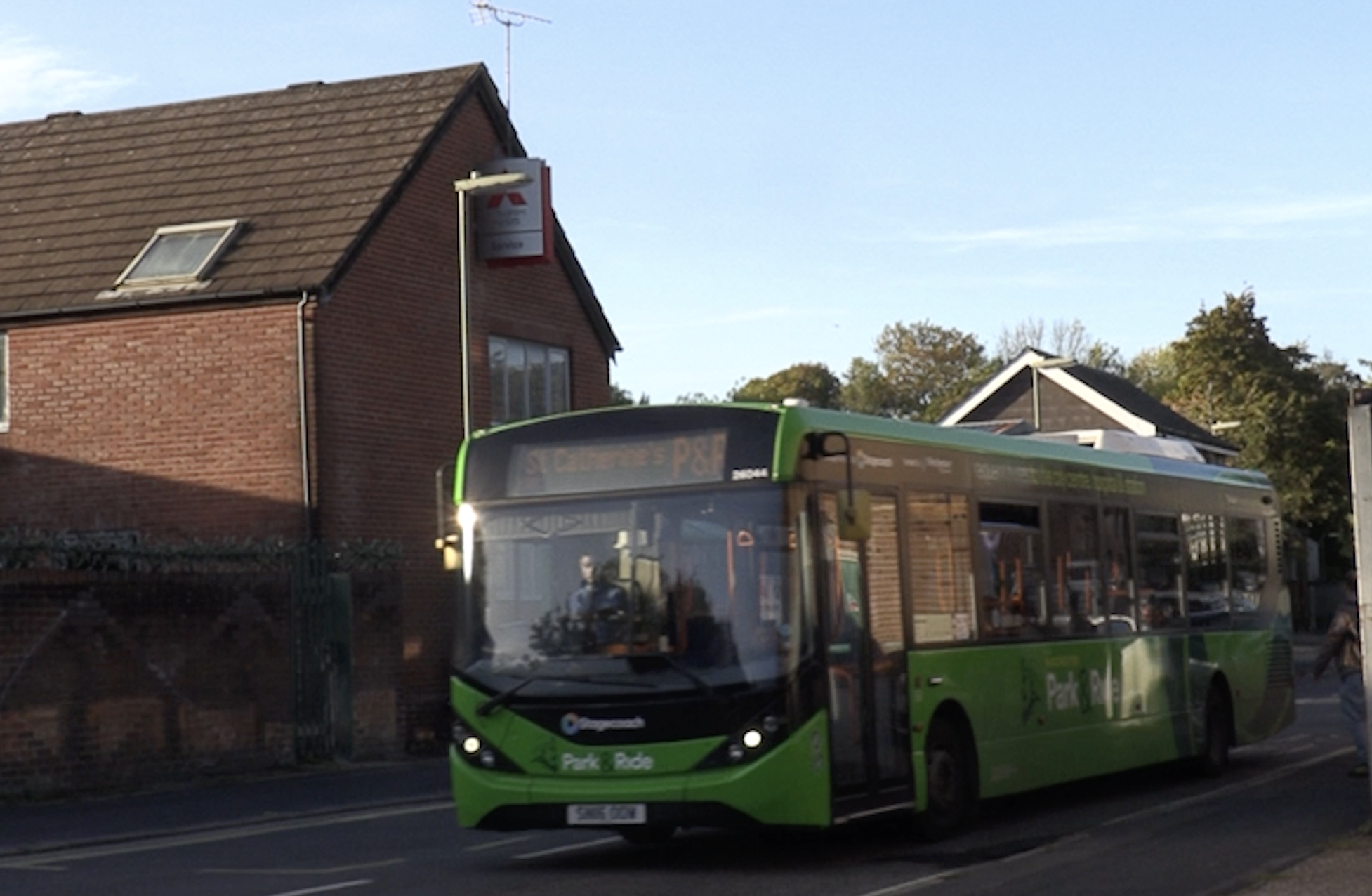
Park and ride users in Winchester will pay an extra pound per day from next month.
Winchester City Council posted “notices of variation for charges” across park & ride car parks.
It said that the price for all-day parking will increase from £3.50 to £4.50 and seasonal tickets will rise by 28%.
Some park and ride users were critical of the increase.
One woman, who uses the service regularly, said: “I’m surprised. I haven’t read anything about that at all.
“It does seem quite a steep rise.”
A tourist visiting from Canada said: “I think the service will remain high class, but it may be a hardship for some people who may find it less affordable.”
But another man, who lives in Winchester, said: “It’s so easy, it’s worth paying. I mean, where else would we park in Winchester?”
The Winchester Green Party said any increase in charges needs to be considered carefully to ensure that users are not put off using the service.
“Park and ride plays an important role in Winchester’s transport network.
“It helps reduce congestion in the city centre, supports air quality objectives and provides an alternative to driving into some of Winchester’s busiest streets.
“From a climate perspective, the long-term objective should be to make sustainable travel options attractive, convenient and accessible.
“For many residents and visitors, park and ride remains an important part of that mix, particularly for journeys where walking, cycling or conventional public transport are not practical.”
The council said it will still be free to park on Sundays but there are no buses.
Drivers can also park for free after 4pm as long as they get a ticket.
Winchester City Council was contacted for a response.
A man threw a chair and threatened bystanders in the centre of Gosport on Friday.
Police say the man, who was behaving aggressively, threw the chair on the ground and shouted threats at nearby shoppers before running away. No one was injured.
It happened just before noon, outside a Greggs Bakery on the High Street.
Hampshire Police say the man was white, bald and in his late 40s. He was wearing a baseball cap and a grey hoodie.
Officers are asking anyone who saw the incident to contact them.

Twelve people were arrested after 350 anti-migrant protestors clashed with police overnight in Gosport following reports of a small boat landing in the area.
A small number of officers needed medical treatment following the protests near Walpole car park.
Assistant Chief Constable Simon Dodds said: “Violence and criminal damage have no part in peaceful protest, our position on this has been clear that we will investigate thoroughly and take robust action against anyone responsible.
“Our officers did not deserve to be assaulted as they worked incredibly diligently on Sunday to ensure the safety of everyone in the area.”
Police had banned face coverings and had issued a dispersal order ahead of the protests across Gosport.
Those arrested were held on suspicion of assaulting officers or being drunk and disorderly.
The protest marks an increase in tensions within the UK after protests at Portsmouth, Taunton, Basingstoke and Glasgow in recent months.
Gosport Reform UK councilor Paul Carter told GB News: “If you think about this last night, no one really knew what was happening… I think a lot of people are really worried.”
-

 Bulletins3 years ago
WINOL Sport Week 9 14/11/2023
-

 Bulletins3 years ago
WINOL – Week 9 – 14/11/2023
-

 Bulletins2 years ago
Latest news bulletin for Winchester
-
 Culture9 years ago
ALICE WHEATLEY: SIMON HARMER – BLOWN AWAY
-

 Bulletins3 years ago
Winol bulletin – Week 6 – 20/02/24
-
 Documentary9 years ago
Georgie Wingrove: Peter Waterfield – Life After the Olympics
-

 Inside Journalism3 years ago
Journalists in the News: AI Journalism
-

 Bulletins2 years ago
Latest news bulletin for Winchester